
What Is A Bomb Cyclone?
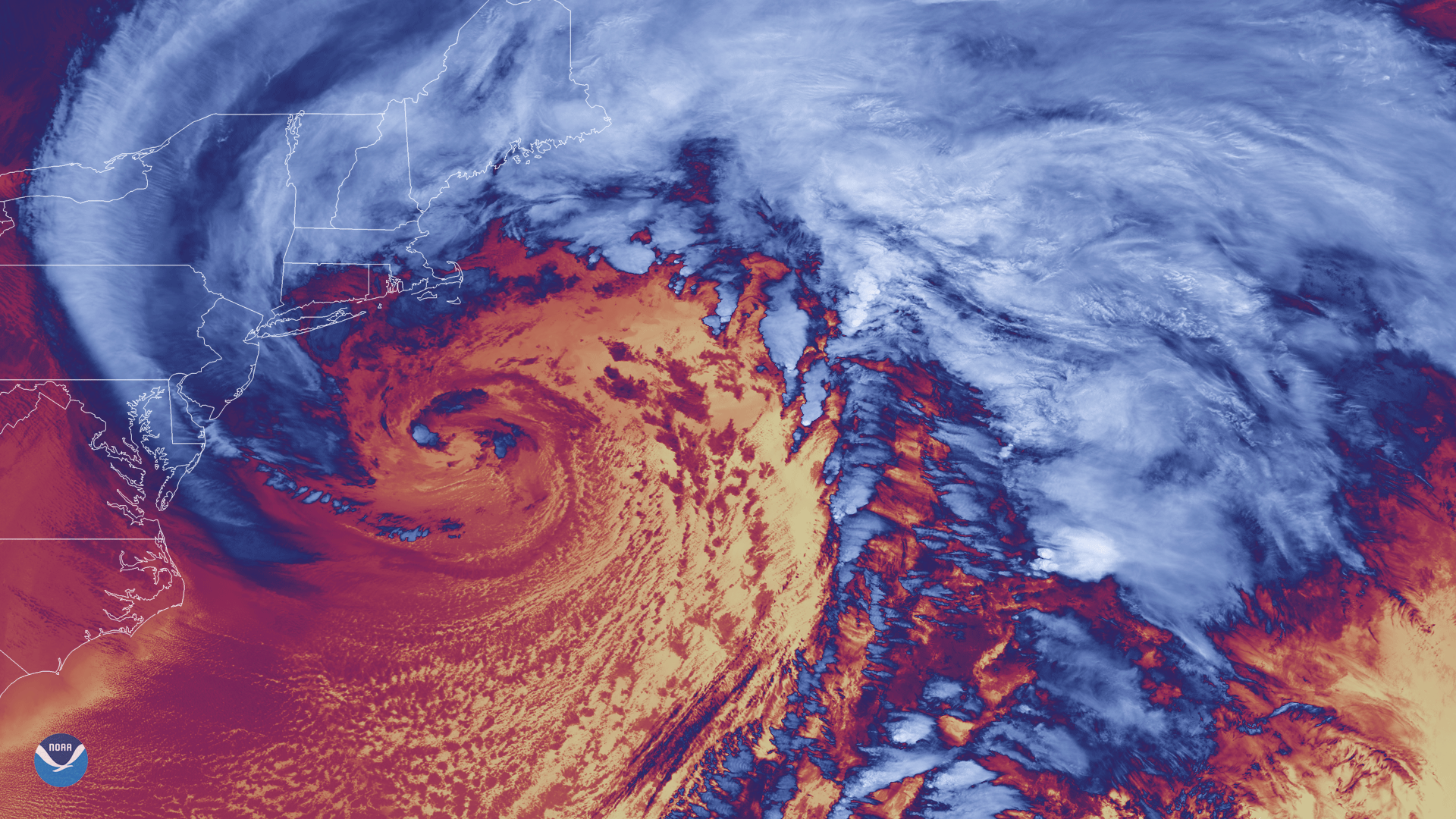
Satellite imagery of a bomb cyclone. Image from NOAA
Bill Underhill- 2/8/2026
If you’ve been following the weather lately, you’ve probably heard the term bomb cyclone a lot. Since it’s been mentioned so much this past month, I figured I would break down what they actually are.
What They Are
A bomb cyclone is a mid-latitude storm that intensifies very quickly. The process is called bombogenesis. For it to qualify, the storm’s surface pressure has to drop at least 24 millibars in 24 hours. That might not sound like much, but it’s actually extreme. When the pressure falls that fast, everything ramps up. Winds increase, rain or snow becomes intense, and the impacts get serious in a hurry.
How They Form
Usually, it comes down to a clash of air masses. You need a sharp temperature contrast, like when frigid Arctic air slams into warm ocean air. The larger that temperature difference is, the more energy the storm has to work with.
The jet stream also plays a role. When a strong jet streak aligns over a developing low, it acts like a vacuum removing air from the top of the system. This causes the surface pressure to fall and the storm to strengthen fast. This setup is common over the Atlantic during winter, which is why the East Coast is frequently hit by them.
Real-World Impacts
These storms are large and affect a wide area, but the impacts depend on your position relative to the center.
Along the coast, the main concerns are usually damaging winds and storm surge. Farther inland, the threat shifts to heavy rain or intense snow. The cold side is where you see blizzard conditions and near-zero visibility. The warm side can expect soaking rain, flooding, and strong wind gusts.
Final Thoughts
Bomb cyclones are interesting but stressful to forecast. A 50-mile shift in the track is the difference between a cold rain and a major snowstorm. It's why you see the forecast change as new data comes in. Forecasting these far in advance is difficult because the atmosphere is constantly changing, and a small shift can lead to a very different outcome.
Want to read more? Check out my post on the jet stream.